GI Cancer Treatment
GI Cancer Treatment in Ahmedabad
A GI cancer diagnosis raises an immediate question about surgery, but staging how far the cancer has spread, and to where has to be answered first, because it changes everything downstream. A tumor confined to the organ it started in is treated very differently from one that’s already involved nearby lymph nodes or spread further, and confusing these stages leads to either undertreating an advanced cancer or offering surgery to someone who’d be better served starting with other treatment first.
Dr. Vasistha Jajal evaluates and treats cancers across the gastrointestinal tract – stomach, small intestine, colon, rectum, pancreas, liver, and bile duct with staging forming the basis for every treatment decision that follows.
What GI Cancer Treatment Actually Involves
GI cancer treatment starts with confirming the diagnosis through tissue sampling, then staging the cancer’s extent, since both steps together not the diagnosis alone determine the entire treatment sequence.
Tissue Diagnosis
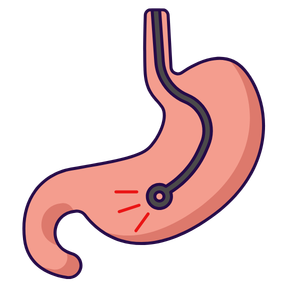
Biopsy, usually via endoscopy or colonoscopy, confirms the cancer type before any staging begins.
Staging Imaging
CT, MRI, or PET-CT scans assess how far the cancer has spread beyond its original site.
Multidisciplinary Review
Cases are reviewed with oncology and, where relevant, radiation oncology to agree on a sequence.
Treatment Sequencing
Surgery, chemotherapy, or radiation are ordered based on stage, sometimes combined in a planned sequence.
Post-Treatment Surveillance
Regular follow-up and imaging monitor for recurrence once initial treatment is complete.

Correct treatment sequencing gives each therapy the best chance of being effective.

Accurate staging prevents overtreatment of cancers that are actually more localised.

Some staged cancers respond well enough to non-surgical treatment to avoid major surgery.
Operating before appropriate staging can miss disease that's already spread beyond the visible tumor.

Cancer Stage Changes the Entire Plan
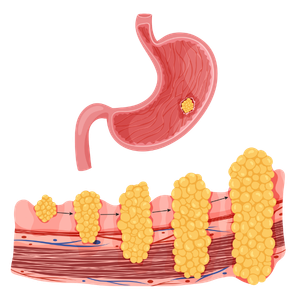
GI cancers are broadly grouped by how far they’ve spread, and this grouping is what actually drives the treatment sequence.
Early-stage cancers
confined to the organ of origin without lymph node involvement, are often treated with surgery as the primary and sometimes only treatment needed.
Locally advanced cancers,
involving nearby lymph nodes or adjacent structures but not distant organs, often need chemotherapy or radiation before surgery (neoadjuvant treatment) to shrink the tumor and improve surgical outcomes.
Metastatic cancers
having spread to distant organs like the liver or lungs, are generally managed primarily with systemic treatment, with surgery considered selectively for symptom relief or in specific cases where removing both the primary tumor and limited spread offers a meaningful benefit.
Recurrent Cancers
returning after initial treatment, are restaged fully before deciding whether surgery, further systemic treatment, or a combination is appropriate.
When Should You See a GI Cancer Specialist?
GI cancer symptoms are often non-specific in early stages, which is part of why persistent or unusual patterns rather than any single symptom tend to be what prompts further investigation.
Unexplained weight loss over recent weeks or months
Persistent difficulty or pain while swallowing food
Blood in stool or unexplained rectal bleeding
Dr. Vasistha Jajal’s super-specialty training in gastrointestinal and hepato-pancreato-biliary surgery, completed at one of India’s established centres for this field following a second-rank result in the All India Super Specialty Examination, included direct exposure to cancer staging and surgical planning across the digestive tract from stomach and colorectal cancers to more complex pancreatic and biliary malignancies.
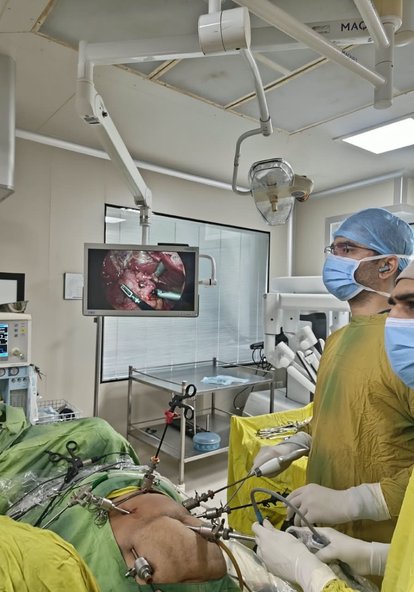
Across more than 5,000 operations, GI cancer cases are approached with staging accuracy treated as the foundation for every subsequent decision, working alongside oncology teams rather than making surgical decisions in isolation from broader cancer treatment planning.
When surgery is part of the treatment plan, the specific procedure depends entirely on the cancer’s location and stage ranging from more limited resections for early, localised tumors to more extensive procedures involving lymph node clearance for locally advanced disease. For cancers involving the colon, rectum, pancreas, or liver specifically, the Colorectal Cancer Treatment, Pancreas Cancer Treatment, and Liver Tumor Treatment pages describe the surgical approach for each in more detail.
What Sets This GI Cancer Treatment Practice Apart
A look at how staging discipline, multidisciplinary coordination, and surgical range shape outcomes in GI cancer care specifically.

Case Volume
Over 2,000 operations performed, including surgical management of GI malignancies.
Staging-Led Approach
Treatment sequence built entirely around accurate staging, not diagnosis alone.

Rank Credentials
Second rank nationally in the All India Super Specialty Examination during surgical training.

Oncology Coordination
Surgical planning conducted alongside oncology teams for combined treatment cases.
Cross-Organ Surgical Range
Experience spanning stomach, colorectal, pancreatic, liver, and biliary cancer surgery.

Structured Surveillance
Long-term follow-up planned from the outset, not only after treatment concludes.
What Patients Ask About GI Cancer Treatment
Does a GI cancer diagnosis always mean immediate surgery?
No, treatment order depends on staging. Some cancers need chemotherapy or radiation before surgery is even considered.
How is GI cancer staged?
Through imaging like CT, MRI, or PET-CT, combined with biopsy findings, to assess local extent and any spread.
Can GI cancer be treated without surgery at all?
For some early or metastatic cases, yes, treatment may rely primarily on systemic therapy rather than surgery.
What does a multidisciplinary cancer review involve?
Surgical, oncology, and sometimes radiation oncology teams review the case together to agree on treatment sequencing.
Is follow-up needed after successful GI cancer treatment?
Yes, structured long-term follow-up with imaging and blood tests is standard to monitor for recurrence.
Recently Diagnosed or Investigating GI Cancer Symptoms?
A new GI cancer diagnosis, or symptoms that suggest one, calls for prompt evaluation rather than delay, since staging accuracy early on shapes the entire treatment path ahead. Book a Consultation with Dr. Vasistha Jajal