

Appendix Surgery

Appendix Surgery in Ahmedabad

Appendicitis doesn’t wait for a convenient time. Once the appendix is inflamed, the window to operate safely is measured in hours, not days, which is why this is one of the few conditions where “should I get a second opinion first” often isn’t the right question to spend time on. Delay changes the surgical plan itself: a straightforward case can turn into a complicated one within a day.

Dr. Vasistha Jajal treats acute and complicated appendicitis with laparoscopic appendectomy in most cases, reserving open surgery for situations where the appendix has already ruptured or scarring makes the laparoscopic approach unsafe. Diagnosis, surgery, and recovery are typically managed within a single hospital admission, since appendicitis rarely allows for the longer planning window that other GI surgeries have.

What Appendix Surgery (Appendectomy) Actually Means

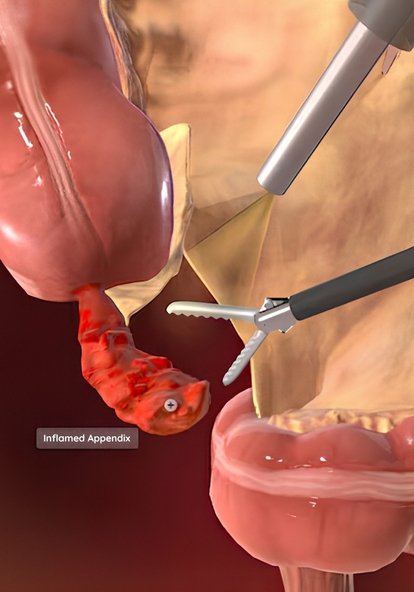
An appendectomy removes the inflamed appendix, most often through three small incisions rather than one large one, resolving the infection at its source before it spreads further into the abdomen. Here’s how it works:

Diagnosis Confirmation

Clinical examination and imaging (usually ultrasound or CT) confirm appendicitis before surgery is scheduled.

Small Incision Access

Three small incisions allow a camera and instruments to reach the appendix without a large abdominal cut.

Appendix Isolation

The appendix is separated from the surrounding bowel and its blood supply is sealed off.

Appendix Removal

The appendix is detached and removed through one of the small incisions, usually inside a retrieval bag.

Abdominal Wash

If any infection or fluid has spread beyond the appendix, the abdominal cavity is washed out before closing.

Faster Discharge

Most patients go home within 24 to 48 hours after an uncomplicated laparoscopic appendectomy.

Lower Wound Risk

Smaller incisions carry a lower chance of wound infection than one large abdominal cut.

Quicker Return Home

Most people are back to routine, non-strenuous activity within a week of surgery.

Less Post-Op Pain

Reduced muscle cutting means pain in the days after surgery is milder to manage.

How the Appnedix Surgery Plan Changes

Not every appendicitis case is the same by the time it reaches assessment, and the surgical approach changes accordingly.

1. Early, uncomplicated appendicitis

is treated with a standard laparoscopic appendectomy, usually within hours of diagnosis

2. Perforated Appendicitis

(where the appendix has already ruptured) may still be approached laparoscopically, but often needs a longer operation, a wash of the abdominal cavity, and sometimes a drain left in place.

3. An appendix mass or abscess

where the body has already walled off the infection is sometimes treated first with antibiotics and drainage, with surgery planned six to eight weeks later once inflammation has settled.

When Should You See a Specialist for Appendix Surgery

Appendicitis rarely announces itself with one clear sign. It usually starts as vague discomfort and sharpens over a matter of hours, which is often what pushes people to seek care rather than wait it out. The pattern of how the pain moves and builds tends to matter more than any single symptom in isolation.

Pain starting near the navel, shifting to lower right

Loss of appetite with worsening discomfort

Pain that worsens with movement or coughing

Abdominal pain lasting more than twelve hours

Low-grade fever with abdominal pain and nausea

Tenderness when pressure is released from abdomen
Dr. Vasitha Jajal's Approach to Appendix Cases

Dr. Vasistha Jajal’s residency training in the gastro surgery department at Civil Hospital, Ahmedabad, involved handling appendicitis cases across every stage of presentation from early, straightforward cases to advanced ones arriving with perforation or abscess formation already established. That range of exposure is what informs whether a case goes straight to surgery or is managed with antibiotics first.

Across more than 5,000 operations, appendectomy is among the more frequently performed procedures at this practice, with laparoscopic technique used as the default approach unless imaging or intraoperative findings indicate otherwise.

Years of Experience
0 +
Surgeries Performed
4500 +
Key Surgical Areas
0 +
Start Your Surgical Journey in Three Simple Steps

Reach out to the clinic by phone or fill out the online consultation form.

Book Your Appointment

Choose a convenient consultation time and confirm your appointment.

Meet Dr. Vasistha Jajal for an evaluation and discuss your treatment options

Inside the Operating Room

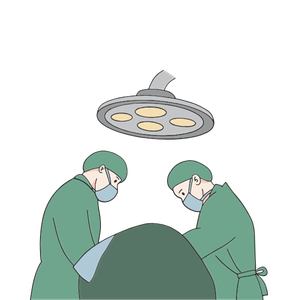
A standard laparoscopic appendectomy takes 30 to 45 minutes under general anaesthesia. Complicated cases where perforation or an abscess is present can take longer due to the need for a thorough abdominal wash and, occasionally, placement of a drain. If dense adhesions or unclear anatomy make the laparoscopic approach unsafe, the operation is converted to open surgery, a decision made in the interest of safety rather than as a sign of a difficult case.

+91-96874 86618

What Sets This Appendix Surgery Practice Apart

A look at how case volume, timing judgment, and complication handling shape outcomes in appendix surgery.

Case Volume

Over 2,000 operations performed, with appendectomy among the most frequently repeated procedures.

Complication Handling

Direct residency exposure to perforated and abscess-stage appendicitis, not only simpler cases.
Timing Judging

Decision between immediate surgery and delayed surgery based on imaging, not a fixed protocol.

Rank Credentials

Second rank nationally in the All India Super Specialty Examination during surgical training
Conversion Honesty

Open surgery chosen mid-operation when anatomy makes it the safer option, not a last resort.

Admission Care

Diagnosis, surgery, and discharge planning managed within a single hospital admission where possible.

What Patients Ask About Appendix Surgery

In select early cases, antibiotics alone are tried, but surgery is usually still recommended afterward to prevent the condition from returning.

Most cases are operated on within hours of diagnosis to reduce the risk of the appendix rupturing before surgery.

A ruptured appendix usually still requires surgery, often with a longer operation and a period of antibiotics to control the infection.

Yes, laparoscopic appendectomy is generally considered safe in pregnancy, with timing and technique adjusted based on trimester.

No. The appendix has no known essential role in adult digestion, and its removal doesn’t affect long-term digestive function.

Are You Dealing With Appendicitis?

Book a Consultation with Dr. Vasistha Jajal and understand your symptoms better. If you're already carrying a diagnosis or scan report from another facility, bring it along so the next steps can be decided without repeating tests. If the pain is new and undiagnosed, the priority is getting examined quickly enough that a straightforward case doesn't turn into a complicated one

About Us

Dr. Vasistha Jajal is a Gastrointestinal and Hepato-Pancreato-Biliary (HPB) Surgeon in Ahmedabad with 10+ years of experience in gastrointestinal surgery. His practice includes laparoscopic, robotic, HPB and gastrointestinal cancer surgery, along with endoscopic procedures. With 5,000+ gastrointestinal and hepatobiliary operations performed, he provides surgical evaluation and treatment for a wide range of digestive, liver, pancreas, gallbladder and bile duct conditions.

Copyright © 2026 Dr. Vasistha Jajal | Designed by EEG Technogeeks 

Scroll to Top