

Pancreatic Cancer Treatment

Pancreatic Cancer Treatment in Ahmedabad

Pancreatic cancer treatment hinges on one word more than any other: resectable. Whether or not a tumor can be safely and completely removed based specifically on its relationship to nearby major blood vessels determines almost everything about the treatment path that follows, far more than tumor size alone. Two tumors of similar size can have completely different treatment plans depending on how close they sit to these vessels, which is why this assessment happens before any conversation about surgery timing even begins.

Dr. Vasistha Jajal evaluates pancreatic cancer (pancreas cancer) through detailed vascular imaging to classify tumors as resectable, borderline resectable, or unresectable, since this classification shapes whether surgery leads treatment, follows chemotherapy, or isn’t the primary approach at all.

What Pancreatic Cancer Treatment Actually Involves

Pancreatic cancer treatment begins with detailed imaging to assess the tumor’s relationship to nearby major blood vessels, since this relationship not tumor size alone determines whether surgery is a safe first option.

Tissue Diagnosis

A biopsy, often obtained via endoscopic ultrasound, confirms the cancer diagnosis before treatment planning proceeds.

Vascular Imaging

CT angiography maps the tumor's relationship to major arteries and veins near the pancreas.

Resectability Classification

Findings classify the tumor as resectable, borderline resectable, or unresectable based on vessel involvement.

Treatment Sequencing

Chemotherapy before surgery is often used for borderline cases to improve the chance of complete removal.

Multidisciplinary Planning

Surgical and oncology teams coordinate treatment order based on the resectability classification.

Improves Surgical Success

Pre-surgical chemotherapy for borderline cases can improve the chance of a clean surgical margin.

Avoids Unnecessary Surgery

Accurate classification prevents major surgery being attempted on tumors unlikely to benefit.

Guides Realistic Expectations

Clear classification helps set an honest picture of the treatment path from the outset.

Supports Combined Treatment

Classification determines how chemotherapy and surgery are sequenced together effectively.

Why Jaundice Often Needs Addressing Before Cancer Treatment Begins

Robotic assistance isn’t offered as a universal upgrade, it’s selected for specific technical demands. The decision to use robotic assistance is based on anatomical complexity shown on imaging, not on offering a more advanced-sounding option by default. At this practice, it’s considered for:

When Should You See a Pancreatic Cancer Surgeon?

Pancreatic cancer symptoms are often subtle in early stages, which is a significant part of why the condition tends to be diagnosed at a later stage than many other GI cancers.

Yellowing of skin or eyes without obvious cause

New-onset diabetes without typical risk factors

Unexplained weight loss over recent weeks

Pale, oily stools alongside dark urine

Persistent upper abdominal or back pain

Loss of appetite alongside general digestive discomfort
Dr. Vasistha Jajal's Experience With Pancreatic Cancer

Dr. Vasistha Jajal’s research interests through his super-specialty training have specifically included pancreas and bile duct disease, directly relevant to the detailed vessel-mapping assessment central to pancreatic cancer treatment planning. His HPB training, completed at one of India’s established centres for this field following a second-rank result in the All India Super Specialty Examination, included focused exposure to complex pancreatic resections, including the Whipple procedure for tumors at the head of the pancreas.

Across more than 5,000 operations, pancreatic cancer cases are approached with resectability classification treated as the essential first step, coordinated closely with oncology to sequence chemotherapy and surgery appropriately rather than deciding on surgery in isolation.

Years of Experience
0 +
Surgeries Performed
4500 +
Key Surgical Areas
0 +
Start Your Surgical Journey in Three Simple Steps

Reach out to the clinic by phone or fill out the online consultation form.

Book Your Appointment

Choose a convenient consultation time and confirm your appointment.

Meet Dr. Vasistha Jajal for an evaluation and discuss your treatment options
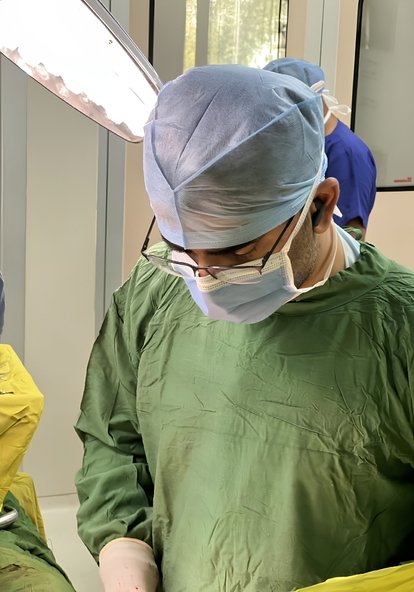

Inside the Operating Room

For tumors at the head of the pancreas, the Whipple procedure (pancreaticoduodenectomy) is the standard surgical approach, removing the head of the pancreas along with the adjoining duodenum, bile duct, and gallbladder, followed by reconstruction to restore digestive and biliary drainage. For tumors in the body or tail of the pancreas, a distal pancreatectomy, sometimes including the spleen, is performed instead. Both procedures are extensive, typically taking four to six hours under general anaesthesia, given the complexity of the reconstruction involved.

+91-96874 86618

What Sets This Pancreatic Cancer Treatment Practice Apart

A look at how resectability precision, research focus, and complex surgical experience shape outcomes in pancreatic cancer care specifically.

Case Volume

Over 2,000 operations performed, including complex hepato-pancreato-biliary procedures.
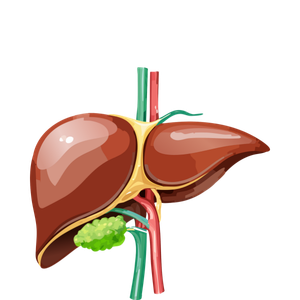
HPB Precision

Specific research interest in pancreas and bile duct disease during super-specialty training.

Rank Credentials

Second rank nationally in the All India Super Specialty Examination during surgical training.

Resectability Precision

Detailed vascular imaging used to classify every case before treatment sequencing begins.

Whipple Procedure Experience

Focused training in pancreaticoduodenectomy for tumors at the pancreatic head.

Oncology-Coordinated Planning

Surgical timing sequenced closely with chemotherapy for borderline resectable cases.

What Patients Ask About Pancreatic Cancer Treatment

It means the tumor can likely be completely removed surgically, based on its relationship to nearby major blood vessels.

No, the Whipple procedure is used for tumors at the pancreatic head; other locations need different surgical approaches.

For borderline resectable tumors, pre-surgical chemotherapy can shrink the tumor enough to improve surgical outcomes.

Treatment focuses on chemotherapy and sometimes radiation, with surgery reconsidered only if the tumor responds significantly.

Often yes, since removing part of the pancreas can reduce its digestive enzyme output.

Recently Diagnosed or Investigating Symptoms of Pancreatic Cancer?

A pancreatic cancer diagnosis, or symptoms suggesting one, calls for prompt evaluation given how much treatment planning depends on accurate early staging and vessel mapping. Book a Consultation with Dr. Vasistha Jajal

About Us

Dr. Vasistha Jajal is a Gastrointestinal and Hepato-Pancreato-Biliary (HPB) Surgeon in Ahmedabad with 10+ years of experience in gastrointestinal surgery. His practice includes laparoscopic, robotic, HPB and gastrointestinal cancer surgery, along with endoscopic procedures. With 5,000+ gastrointestinal and hepatobiliary operations performed, he provides surgical evaluation and treatment for a wide range of digestive, liver, pancreas, gallbladder and bile duct conditions.

Copyright © 2026 Dr. Vasistha Jajal | Designed by EEG Technogeeks 

Scroll to Top