Colorectal Cancer Treatment
Colorectal Cancer Treatment in Ahmedabad
Colon cancer and rectal cancer get grouped together under “colorectal cancer” often enough that the distinction between them gets lost, but the treatment sequence for each is genuinely different. Rectal cancer, sitting in the confined space of the pelvis close to structures involved in continence, frequently needs chemotherapy and radiation before surgery, while colon cancer more often goes straight to surgery. Getting this distinction right at diagnosis shapes the entire treatment timeline that follows.
Dr. Vasistha Jajal treats both colon and rectal cancer with staging-led surgical planning, using laparoscopic or robotic technique depending on tumor location and complexity.
What Colorectal Cancer Treatment Actually Involves
Colorectal cancer treatment is planned around tumor location, stage, and, for rectal cancer specifically, proximity to the sphincter muscles responsible for continence.
Colonoscopy and Biopsy
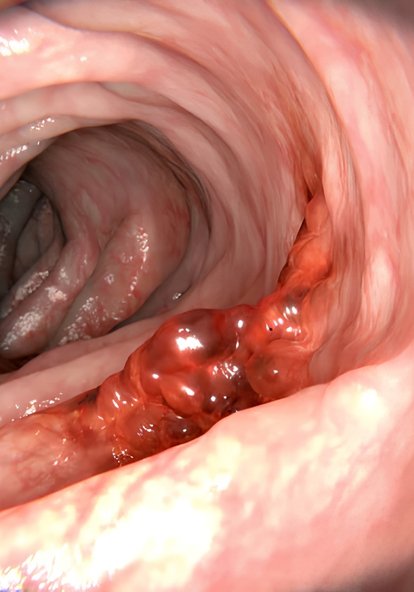
A colonoscopy identifies the tumor's exact location and obtains tissue for diagnosis confirmation.
Staging Imaging
CT and, for rectal cancer, pelvic MRI assess local extent, lymph node involvement, and distant spread.
Neoadjuvant Treatment Decision
Rectal cancers involving nearby structures or lymph nodes are often treated with chemoradiation before surgery.
Surgical Resection
The affected segment of colon or rectum is removed along with surrounding lymph nodes.
Reconstruction Planning
Bowel continuity is restored where possible, with a stoma used temporarily or permanently when needed.

Pre-surgical treatment for rectal cancer can shrink tumors, improving the chance of complete removal.

Careful planning around the sphincter reduces the likelihood of a permanent stoma when avoidable.
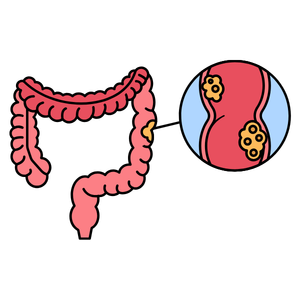
Combined treatment sequencing for rectal cancer specifically lowers local recurrence rates.

Accurate staging at treatment directly shapes how closely follow-up monitors for recurrence.

Treatment Sequence Changes with Location of Tumour
Where the tumor sits within the colon or rectum meaningfully changes both the treatment order and the surgical technique used.
Colon Cancer
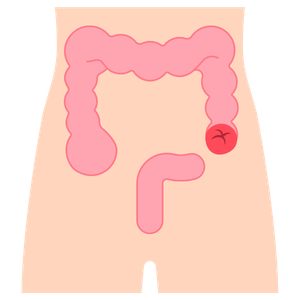
located in the longer upper portion of the large intestine, is usually treated with surgery first, followed by chemotherapy if staging findings indicate a higher risk of recurrence.
Upper and mid rectal cancer
is often treated similarly to colon cancer, though pelvic MRI is used to confirm whether nearby structures are involved before deciding on treatment order.
Lower rectal cancer
sitting close to the anal sphincter, more frequently needs chemoradiation before surgery to shrink the tumor and improve the chances of preserving sphincter function.
Locally advanced rectal cancer
involving nearby lymph nodes or structures beyond the rectal wall, is almost always treated with neoadjuvant chemoradiation to reduce tumor size before any surgical attempt.
When Should You See a Colorectal Cancer Specialist?
Colorectal cancer symptoms often develop gradually, and changes in bowel habit tend to be dismissed for longer than they should be, particularly since some of these symptoms overlap with more common, benign conditions.
Blood in stool not explained by piles or fissure
A persistent change in bowel habit lasting weeks
Unexplained weight loss alongside digestive symptoms
Dr. Vasistha Jajal’s super-specialty training followed a second-rank result in the All India Super Specialty Examination, which placed him at one of India’s established centres for gastrointestinal and hepato-pancreato-biliary surgery. His focused exposure to complex biliary, pancreatic, and colorectal cases during this training is the background he draws on when assessing whether a case needs robotic precision or is better served by standard laparoscopic technique.
Across more than 5,000 operations, the instrument choice be it robotic, laparoscopic, or open has been decided case by case, based on what the imaging and intraoperative findings actually require, rather than defaulting to any one approach.
Colon cancer surgery typically takes two to three hours under general anaesthesia, most often performed laparoscopically, involving removal of the affected segment along with its lymph node drainage and reconnection of the remaining bowel. Rectal cancer surgery, particularly for lower tumors, can take longer and may involve either a laparoscopic or robotic approach given the precision needed to work within the confined pelvic space while protecting continence-related structures.
What Sets This Robotic Surgery Practice Apart
A look at how case selection, console experience, and decision-making shape outcomes in robotic-assisted GI and HPB surgery.

Case Volume
Over 2,000 operations performed, including colorectal cancer resections.

Robotic Option
Robotic assistance offered for low rectal cancer cases needing precise pelvic dissection.

Rank Credentials
Second rank nationally in the All India Super Specialty Examination during surgical training.

Sphincter Preservation Focus
Continence-preserving technique prioritised for rectal cancer wherever oncologically appropriate.

Colon-Rectal Distinction
Treatment sequence built around whether the tumor is colon or rectal, not treated uniformly.

Honest Stoma Discussion
Stoma likelihood discussed clearly in advance based on tumor location, not assumed.
What Patients Ask About Colorectal Cancer Treatment
Is colon cancer the same as rectal cancer?
No, they’re related but treated differently rectal cancer more often needs chemoradiation before surgery.
Will I definitely need a stoma with colorectal cancer surgery?
Not necessarily. Many patients keep bowel continuity, sometimes with a temporary stoma during healing.
How is colorectal cancer staged before treatment?
Through colonoscopy for tissue diagnosis, combined with CT and, for rectal cancer, pelvic MRI.
Is laparoscopic surgery suitable for colorectal cancer?
Yes, for most cases, with robotic assistance considered for more complex low rectal tumors.
How often is follow-up colonoscopy needed after treatment?
This is arranged individually, typically starting within a year of surgery and continuing periodically afterward.
Concerned About Colorectal Cancer Symptoms or a Recent Diagnosis?
A persistent change in bowel habit or unexplained rectal bleeding is worth investigating with a colonoscopy rather than attributing it to piles or diet indefinitely, since early evaluation directly affects treatment options later. Book a Consultation with Dr. Vasistha Jajal