Robotic Surgery
Robotic Surgery in Ahmedabad
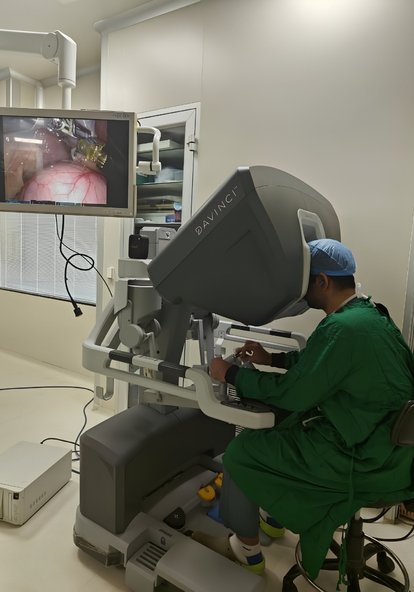
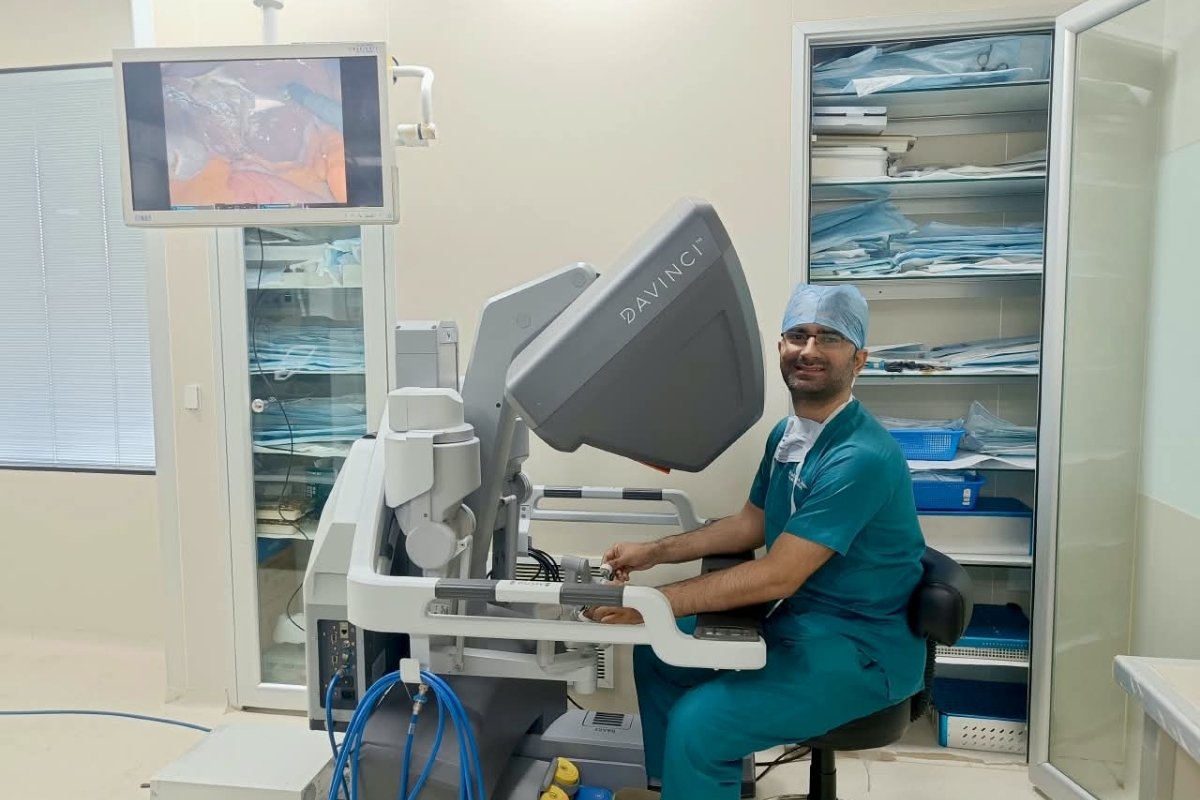
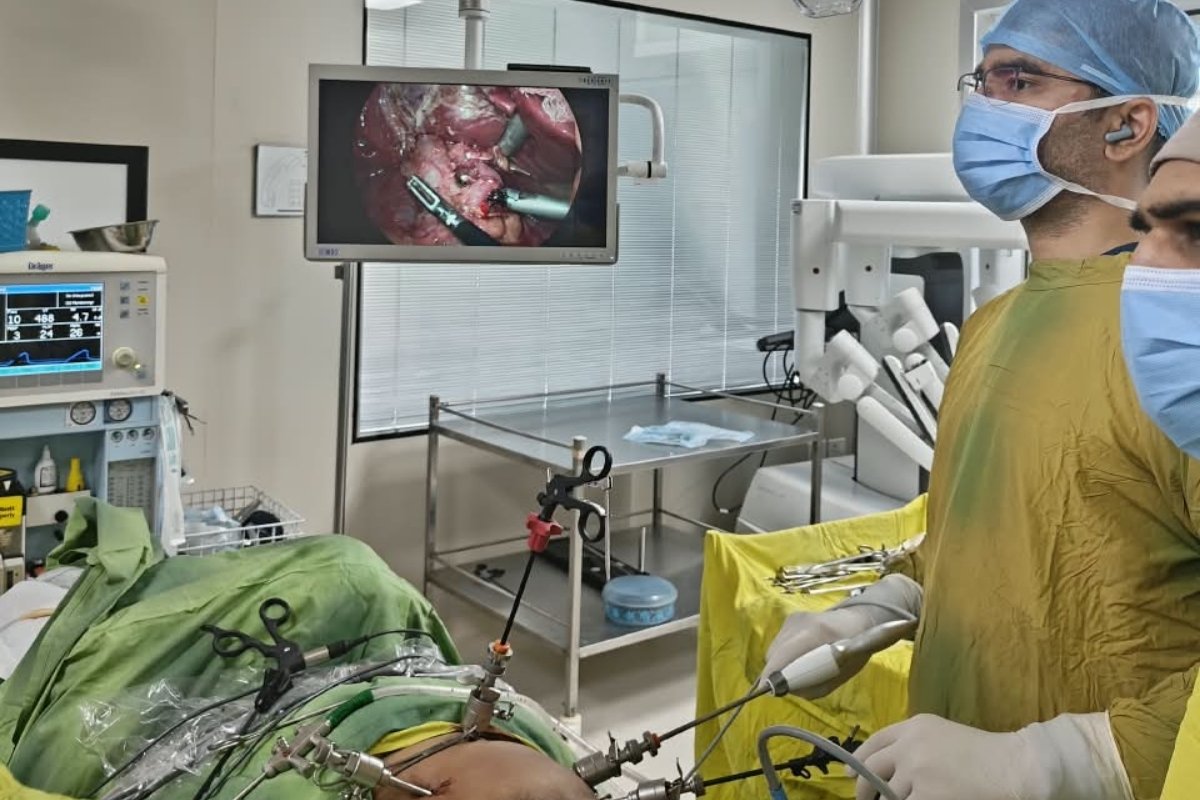
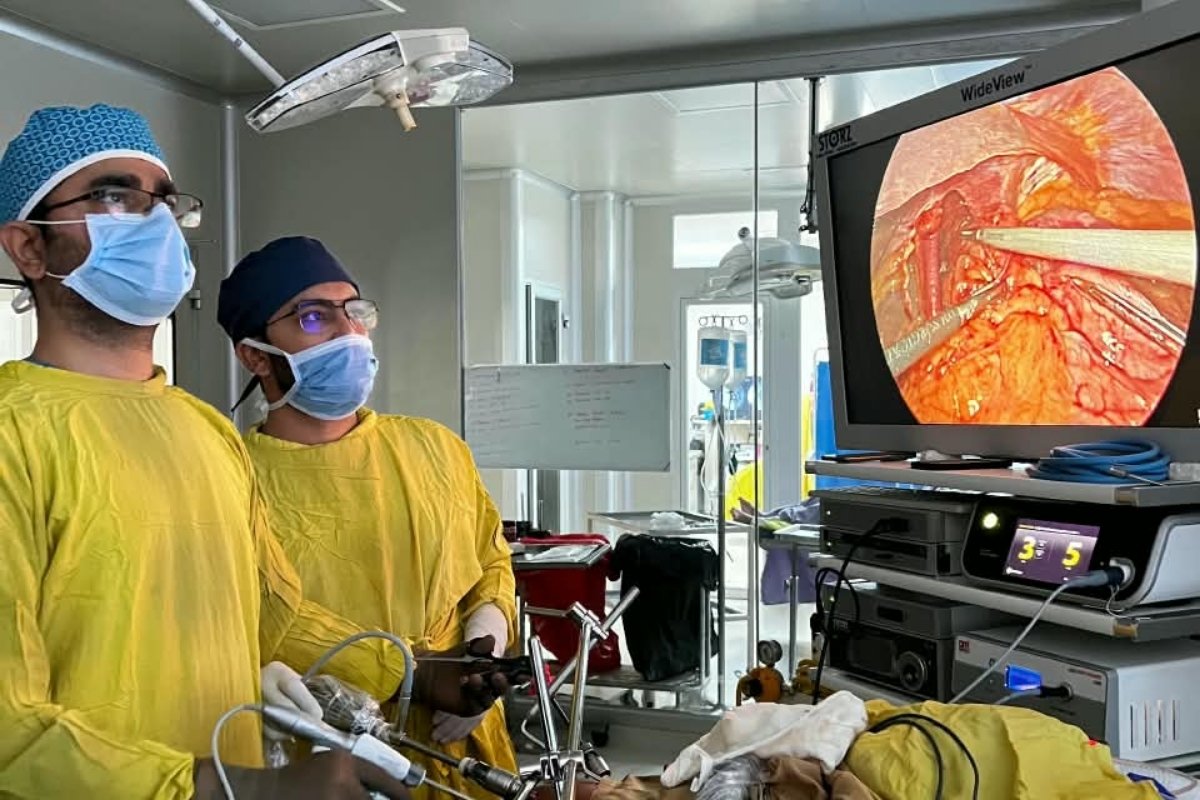
Robotic surgery isn’t a machine operating on its own, it’s Dr. Vasistha Jajal operating from a console a few feet from the patient, controlling wristed instruments that move with more range and stability than the human hand alone. The camera holds a fixed, tremor-free view. The instruments bend and rotate inside the body in ways a straight laparoscopic tool cannot.
It extends the same small-incision principle as laparoscopic surgery, but is used selectively for cases where the anatomy is tight, the dissection is fine, or the reconstruction (rejoining tissue after removal) needs more precision than standard laparoscopic instruments comfortably allow.
What "Robotic Surgery" Actually Means
Robotic surgery uses a surgeon-controlled console and a set of wristed instruments to operate through small incisions, giving more precise, tremor-filtered control than the hand can achieve directly.
Console
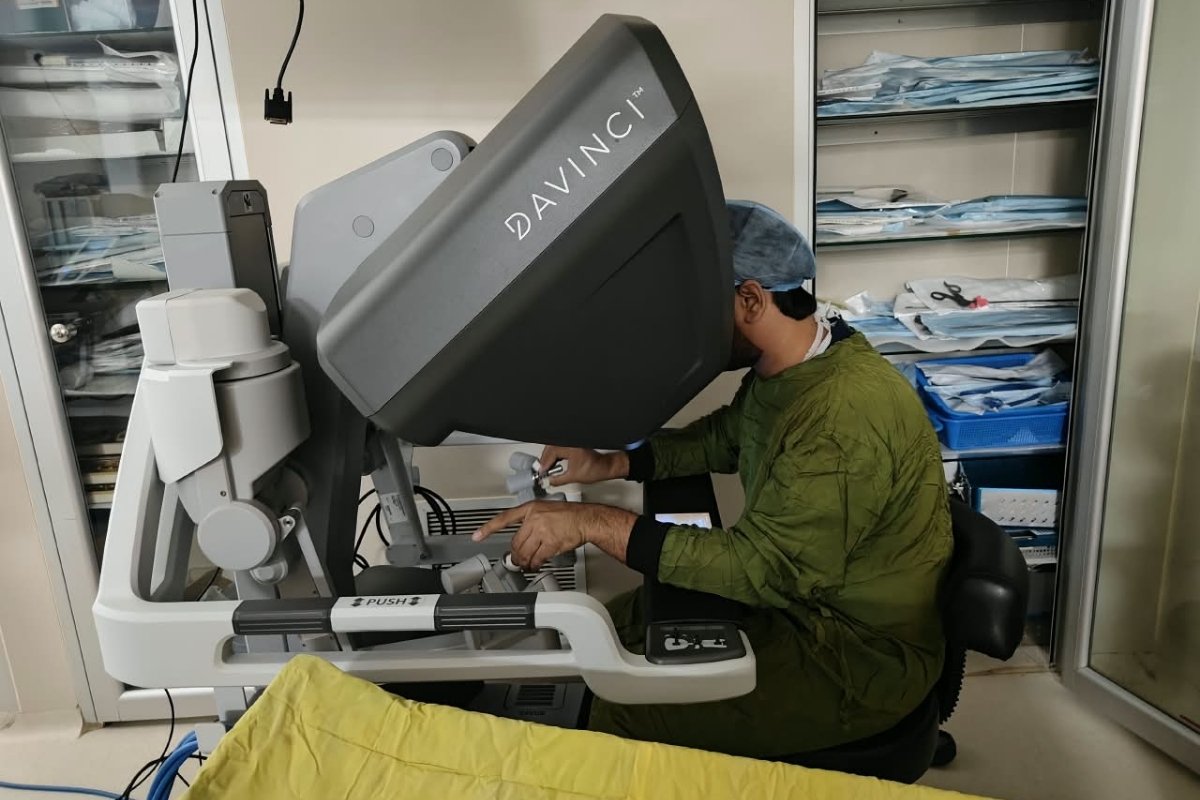
Dr. Vasistha Jajal sits at a console in the same operating room, viewing the surgical field in 3D and controlling every instrument movement.
Robotic Docking
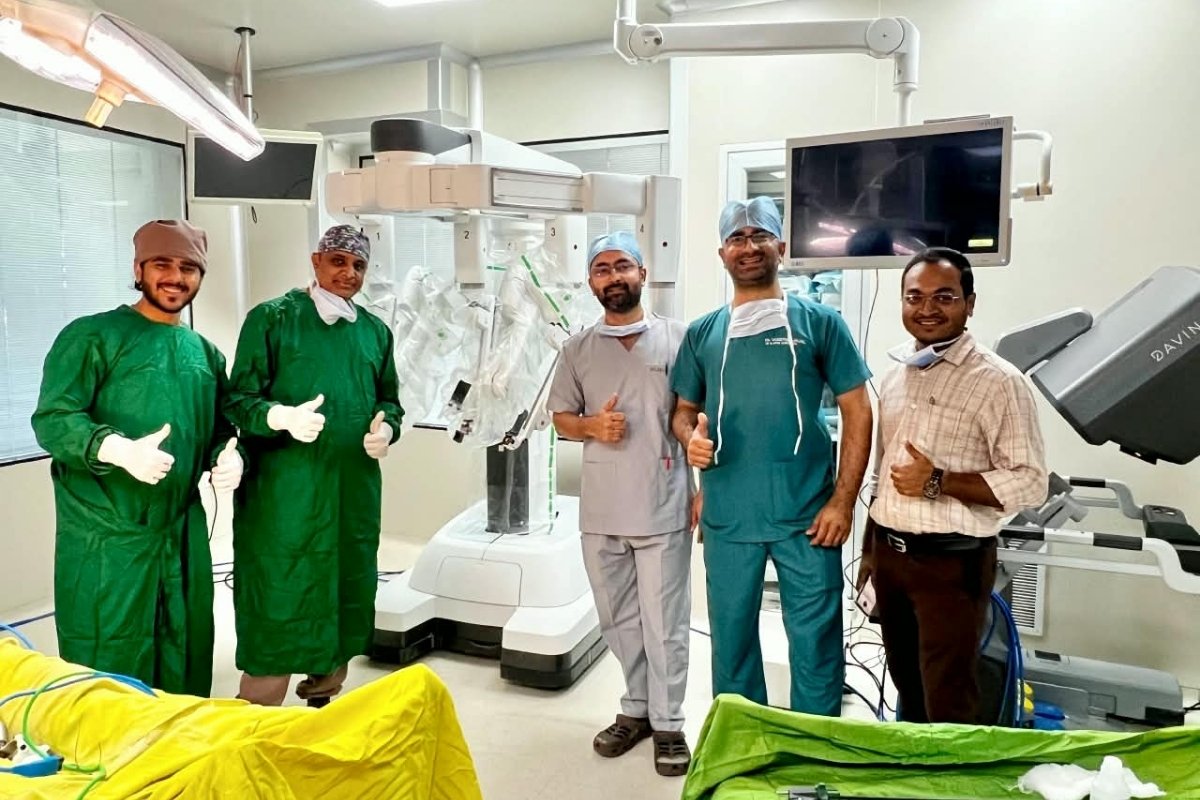
Small incisions allow robotic arms to be docked to the patient, positioning the camera and instruments at the surgical site.
Wristed Instruments
Unlike straight laparoscopic tools, robotic instruments bend and rotate at the tip, mimicking wrist movement inside the body.
Tremor Filtering
The system filters out natural hand tremor and scales large hand movements into smaller, precise instrument movements.
Surgeon-Directed Throughout
The robot has no independent movement or decision-making; every action is initiated and controlled by the surgeon in real time.

Small-incision access is retained, so recovery expectations remain close to laparoscopic surgery.

Instruments rotate and angle inside tight spaces where straight laparoscopic tools have limited reach.

The console shows a magnified 3D view, improving depth perception compared to a flat 2D laparoscopic screen.
Reserved for cases where the anatomy or reconstruction genuinely benefits from added precision.

Where Robotic Surgery Gets Chosen Over Laparoscopic
Robotic assistance isn’t offered as a universal upgrade, it’s selected for specific technical demands. The decision to use robotic assistance is based on anatomical complexity shown on imaging, not on offering a more advanced-sounding option by default. At this practice, it’s considered for:
- Complex hernia repairs, particularly recurrent or large defects needing precise mesh placement
- Hepato-pancreato-biliary procedures where fine dissection near blood vessels and bile ducts is involved
- Colorectal resections requiring precise tissue handling and reconnection deep in the pelvis
- Select GI cancer surgeries where node clearance and margin precision matter
When Should You See a Robotic Surgeon?
Patients are rarely referred for robotic surgery directly. They arrive with a diagnosis often already confirmed by imaging, where the complexity of the case makes precision instrument control relevant:
Hernia recurring after previous surgical repair
Pancreatic lesion detected close to vessels
Bile duct tumour needs precise dissection
Dr. Vasistha Jajal’s super-specialty training followed a second-rank result in the All India Super Specialty Examination, which placed him at one of India’s established centres for gastrointestinal and hepato-pancreato-biliary surgery. His focused exposure to complex biliary, pancreatic, and colorectal cases during this training is the background he draws on when assessing whether a case needs robotic precision or is better served by standard laparoscopic technique.
Across more than 2,000 operations, the instrument choice be it robotic, laparoscopic, or open has been decided case by case, based on what the imaging and intraoperative findings actually require, rather than defaulting to any one approach.
After the patient is positioned and the abdomen is accessed through small incisions, the robotic arms are docked and Dr. Vasistha moves to the console to operate. Procedure length varies more than standard laparoscopic surgery – a complex HPB or colorectal case can run two to four hours, depending on the extent of dissection and reconstruction needed.
If findings during the operation make the robotic approach unsafe or unnecessary, unexpected bleeding, dense scar tissue, or anatomy that changes the plan, the team converts to laparoscopic or open surgery. This is a safety decision made in real time, and patients are counselled about this possibility as part of consent before surgery.
What Sets This Robotic Surgery Practice Apart
A look at how case selection, console experience, and decision-making shape outcomes in robotic-assisted GI and HPB surgery.

Case Volume
Over 2,000 operations performed, with robotic and laparoscopic technique both applied based on case need.

HPB Precision
Super-specialty training in hepato-pancreato-biliary surgery, directly relevant to fine robotic dissection work.

Rank Credentials
Second rank nationally in the All India Super Specialty Examination during surgical training.

Selective Approach
Robotic assistance offered only where anatomy genuinely benefits, not applied as a default option.

Conversion Honesty
Switch to laparoscopic or open surgery made openly if intraoperative findings call for it.

Direct Follow-Up
Post-operative review scheduled to check healing and discuss histopathology results in detail.
What Patients Ask About Robotic Surgery
Is robotic surgery riskier than laparoscopic surgery?
No. Risk depends on the condition and case complexity, not the instrument used. The robot itself doesn’t add risk, it adds control for cases needing finer dissection.
Does the robot operate on its own?
No. The robotic system has no independent movement. Every instrument action is controlled directly by the surgeon at the console in real time.
Is robotic surgery more expensive than laparoscopic surgery?
Generally yes, due to equipment and instrument costs. The exact difference depends on the procedure and is discussed during consultation before surgery is planned.
Will robotic surgery leave smaller scars than laparoscopic surgery?
Scar size is similar to laparoscopic surgery, since both use small incisions. Robotic surgery’s advantage is instrument precision, not smaller cuts.
Is there an age limit for robotic surgery?
There’s no fixed age cutoff. Fitness for anaesthesia and overall health are assessed individually, the same way they are for any major surgery.
The Robotic Surgery Experience
Ready to Discuss Robotic Surgery for Your Condition?
A robotic approach is only recommended after your scans and case history are reviewed in detail. If you've already been told surgery may be needed, bring your existing reports so the assessment can move forward without repeating tests unnecessarily. If you're still investigating symptoms, the first step is a clinical evaluation to confirm what's actually going on before any surgical option is discussed.